
How We Design Co-op Games: Player Interdependence in Practice
A co-op game is only as good as the moments where players need each other. Great graphics and a good story help, but the best part of playing together is the shout of “wait, I see it!” and the group working out the answer as one. Game designers call this player interdependence: how much players rely on each other’s actions to reach the goal.
Every multiplayer game has some of it. The games people remember have a lot of it, on purpose. This post explains how we design for it at Superglue, where every co-op game has to work for a group on a video call: one link, everyone on their own screen, no download.
What player interdependence means
Player interdependence is the degree to which players rely on, and are affected by, each other’s actions to reach the game’s goal. In a loose co-op game you can mostly play alone next to your friends. In a tight one, nothing happens unless you talk.
Studies of social play keep finding that people enjoy multiplayer games more than solo play, largely because of the social side: the banter, the shared wins, the feeling of being part of something. Interdependence is the lever designers use to create more of those moments.
1. One shared goal: win or lose together
The simplest rule is also the most important one. In a co-op game the whole group wins or the whole group loses. Nobody tops a leaderboard while the rest fail.
That rule changes how people behave. The fastest player starts helping the slowest one, because the slowest one is now everyone’s problem. In Marvelli’s Last Show, one of our free escape rooms, some stalls hold answers that other stalls need. Even our party game Consensus uses a version of it: everyone has a secret agenda, but if the group does not agree, nobody scores.
2. Split the information
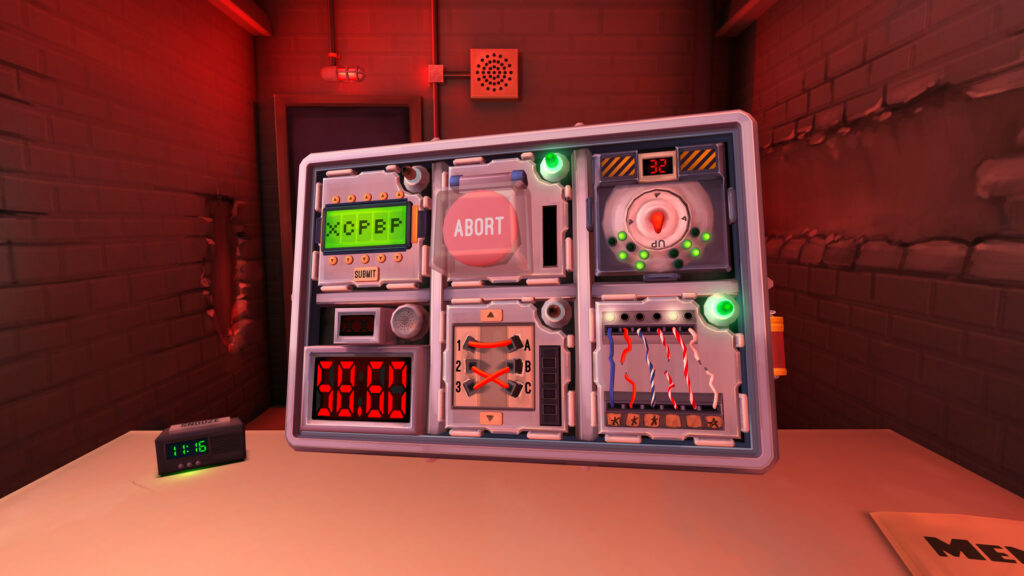
The second tool is to give each player a different piece of the puzzle. Keep Talking and Nobody Explodes is the classic example. One player sees the bomb. The others hold the manual. Only the defuser can see the wires, and only the experts know what to do with them. The game is impossible unless people describe what they see clearly and listen carefully.
Split information works especially well online. On a video call everyone already sits behind their own screen, so a game that shows each player something different turns that distance into the point of the game.
3. Couple the actions
The third tool is to make players’ actions depend on each other. In Overwatch, a tank like Reinhardt holds up a shield while a healer like Mercy keeps him alive. Neither role works well alone.
We use the same idea in puzzle form. In Sync Squad the team guides six robots to one exit, and nobody moves until everybody talks. In Robo Word Finder the letter picks are shared, so nobody hunts for words alone.
4. Build levels one player cannot solve
Level design can force collaboration too. In the co-op mode of Portal 2, many puzzles simply cannot be solved by one player: one person places a portal so the other can jump through it. The level itself is the reason to talk.
Escape rooms work the same way. A good room hides the pieces of a puzzle in different places, so the group has to pool what it found. In Ronin Realm we take it one step further: neither team escapes without the other.
5. Raise the stakes over time
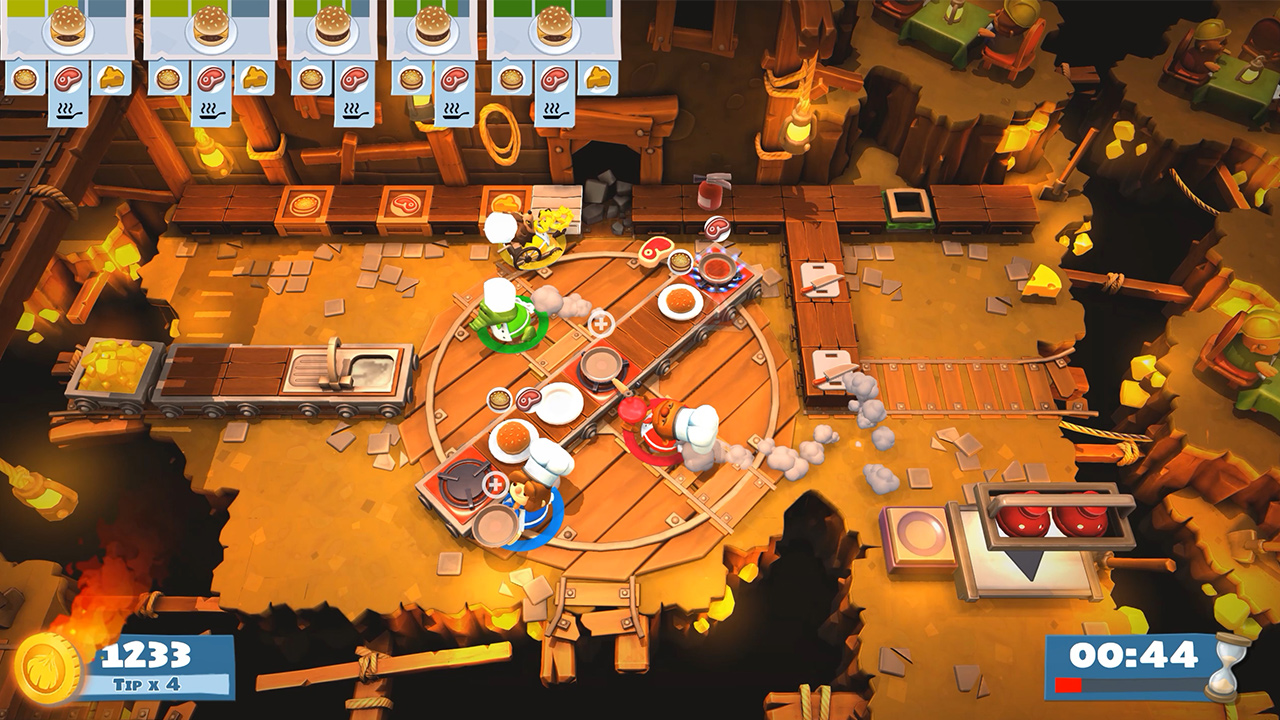
Overcooked shows how interdependence can grow as a game goes on. The first kitchens are simple: one player chops, another fries. Later kitchens add moving platforms, fires and split counters, so players have to call out, hand over and adapt constantly.
We aim for the same curve. Early puzzles teach the group how to work together, and later ones lean on that habit harder, so the team feels itself getting better.
The traps we try to avoid
Interdependence can go wrong. These are the problems we watch for when we design.
- One player runs the show. In many co-op games the most experienced player starts telling everyone what to do. Splitting information helps, because nobody can see everything.
- Someone has nothing to do. Asymmetric roles need balance. Every player should hold something the group needs, or they drift off to check their email.
- Too little freedom. If every move depends on someone else, the game feels like a chore. Good co-op games leave room for personal moments of cleverness.
- Low trust stalls the group. If players don’t trust each other’s calls, the game grinds to a halt. Short rounds and early easy wins help a new group build that trust fast.
- Setup kills the fun. For groups on a call, every minute of installing or explaining is a minute of lost energy. That is why our games run in the browser from one link, with nothing to install.
Keep it a game
Games built “for work” often forget to be fun. We don’t add points and badges to a task and call it a game. People should play because they want to see what is behind the next door, and the teamwork follows from that.
Try it yourself
The fastest way to see these ideas in action is to play. Keep Talking and Nobody Explodes, Holloway and Marvelli’s Last Show are free. Browse all our co-op and party games, or read why you should play video games with your co-workers.