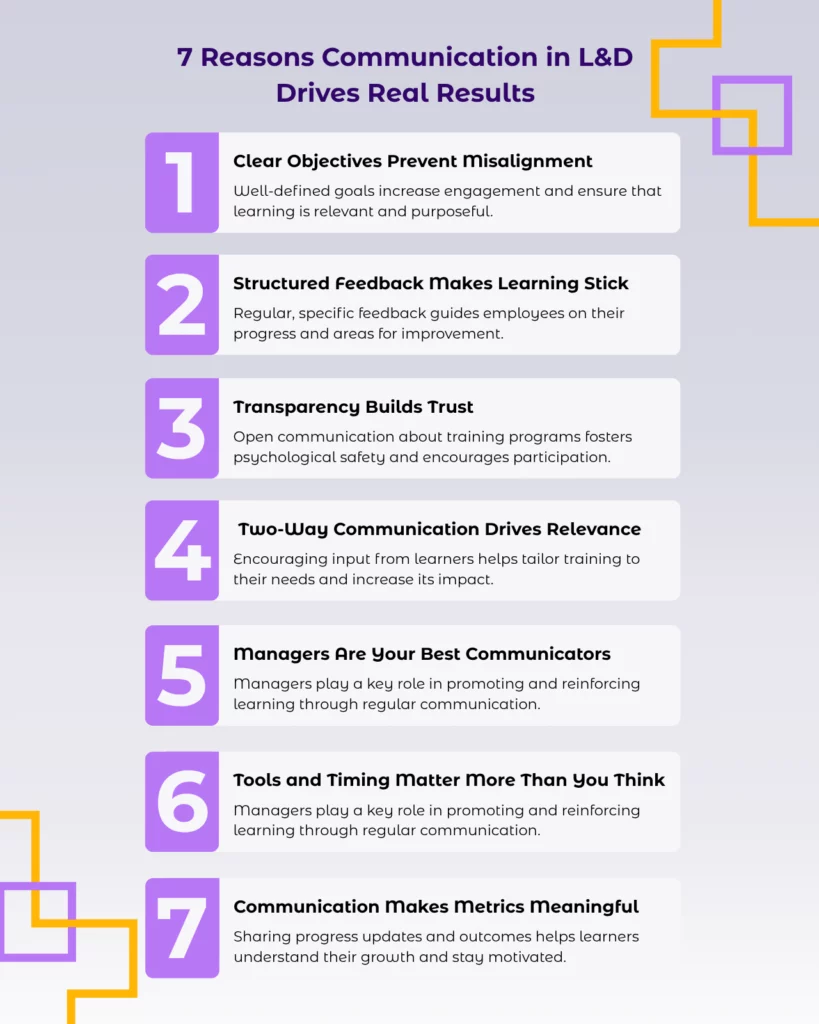
7 Reasons Why Communication in L&D Drives Real Results
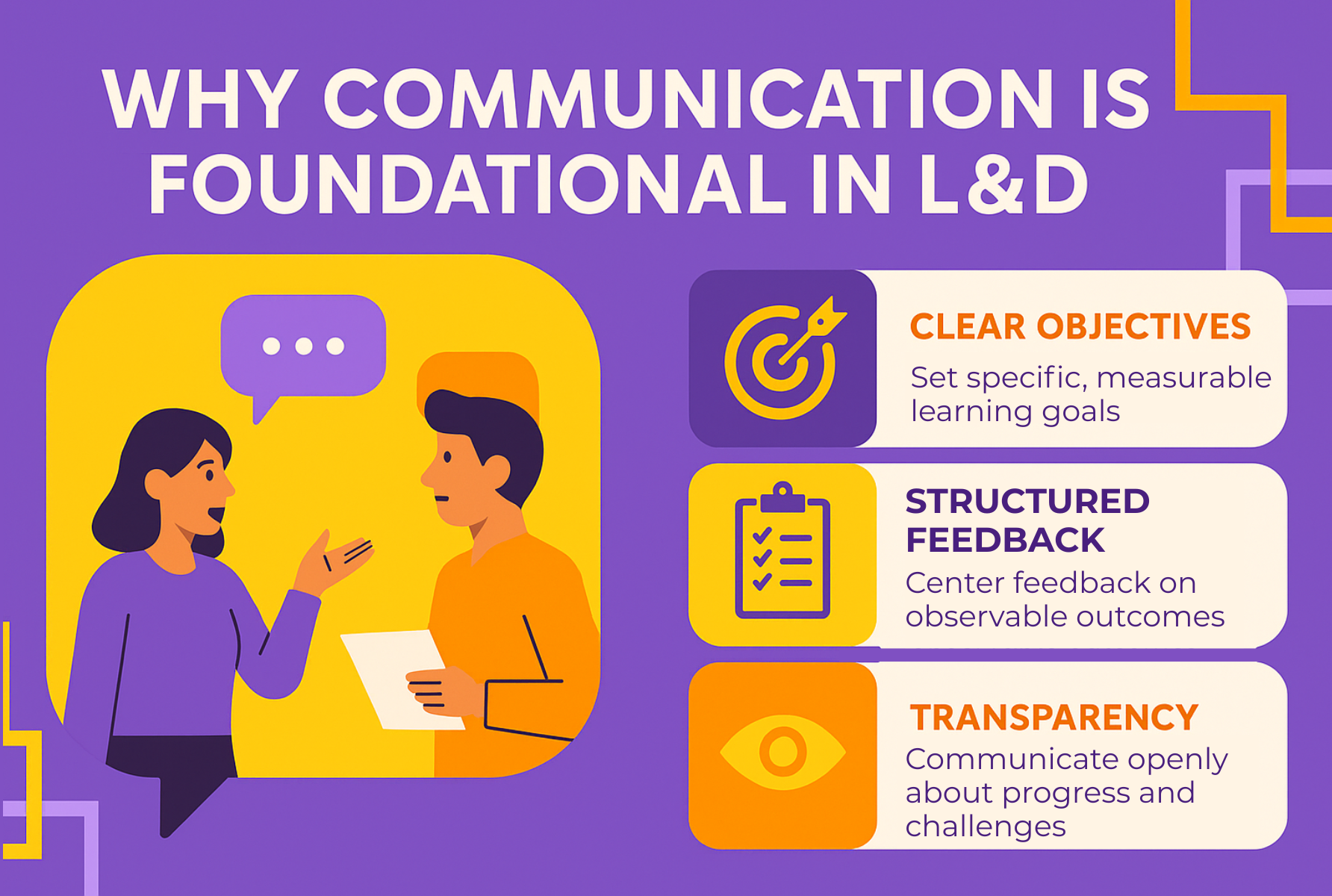
Communication in L&D isn’t just a supporting function, it’s the foundation everything else builds on. Without clear goals, structured feedback, and open dialogue, even well-funded learning programs struggle to stick. In contrast, when communication is intentional and consistent, learning becomes more effective, more engaging, and more measurable.
In this blog, we’ll explore the research behind why communication matters in Learning and Development, unpack how to apply this knowledge practically, and answer common questions that L&D professionals face. Whether you’re building a new learning strategy or fixing a disengaged program, start here.
What Is Communication in L&D, Really?
Let’s be clear: communication in L&D isn’t just about sending an email when a new course is live. It’s about creating shared understanding at every point in the learning journey.
That includes:
- Clarifying the purpose of the learning experience
- Reinforcing key messages across different formats and channels
- Encouraging two-way feedback
- Making learning visible in day-to-day conversations
It’s the connective tissue between the content, the learner, the manager, and the organization.
1. Clear Objectives Prevent Misalignment and Boost Engagement
When learning goals are ambiguous, learners lose interest. They’re unsure how the content applies to them, and they don’t know what success looks like.
Clear communication of objectives increases intrinsic motivation. According to Locke and Latham’s Goal Setting Theory, people perform better when goals are specific and challenging, but still attainable.
For example, saying “We’re running a course on leadership” is vague. Saying “This workshop helps you hold more effective one-on-ones and build trust within your team” is actionable.
How to improve this:
- Co-create goals with learners
- Share objectives before and during the program
- Tie learning goals to real team or business outcomes
📚 Read more: Goal Setting Theory of Motivation
2. Structured Feedback Makes Learning Stick
Without regular, structured feedback, learners are left guessing. Worse, they may continue reinforcing the wrong habits.
According to Hattie and Timperley (2007), feedback is most effective when it answers three questions:
- Where am I going?
- How am I going?
- What’s next?
But many companies miss the mark here. Feedback is too infrequent or too vague. That’s especially damaging when learners are trying to build new skills.
How to improve this:
- Use feedback models like SBI (Situation, Behavior, Impact)
- Incorporate peer and self-assessment
- Build in short, regular feedback loops (e.g. weekly check-ins)
🎧 Also helpful: Podcast episode on giving better feedback
If you’re a facilitator or L&D lead, it’s worth brushing up on effective communication strategies for trainers to better structure sessions, build trust, and handle feedback constructively.
3. Transparency Builds Trust and Psychological Safety
People are more likely to commit to learning if they understand why it’s happening, how it connects to their role, and how their progress will be used. Transparency matters.
According to Google’s Project Aristotle, psychological safety is the top trait of high-performing teams. One way to build it is through transparent communication about learning initiatives.
How to improve this:
- Communicate who designed the program and why
- Share how progress will be measured
- Let learners know who will see their data or feedback
This removes anxiety, reduces resistance, and encourages participation.
4. Two-Way Communication Drives Relevance
Most learning programs are designed for learners, but not with them. That’s a missed opportunity. By opening up two-way communication, you can learn what’s working and adapt faster.
According to a report by Degreed, 55% of employees say they don’t have time to learn, and 44% say learning is not relevant to their role. That’s a communication problem.
How to improve this:
- Ask for feedback mid-way through the learning, not just at the end
- Let learners suggest topics or formats
- Use pulse surveys and informal check-ins to spot early warning signs
5. Managers Are Your Best (or Worst) Communicators
No one influences learner engagement more than their manager. A LinkedIn Learning Report found that 56% of employees would take a course recommended by their manager.
The problem? Many managers don’t know they play a key role in L&D. And even when they do, they don’t feel equipped to guide learning.
How to improve this:
- Train managers on how to support learning conversations
- Provide them with talking points, timelines, and learner updates
- Make learning goals part of 1:1s and performance reviews
By improving communication with managers, you multiply the impact of every L&D initiative.
To maximize the manager’s impact, it’s helpful to align their communication style with broader team methodologies in L&D programs, especially when coaching and feedback are involved.
6. Tools and Timing Matter More Than You Think
Even good communication can fail if it’s in the wrong format or arrives at the wrong time.
For example, announcing a new learning program by email during a peak sales period might mean it gets ignored. Or asking for feedback only at the end of a long course misses chances to adjust earlier.
How to improve this:
- Use a channel matrix to match message type with best platform
- Schedule communications to avoid noisy periods
- Use automated reminders and nudges to keep learning top-of-mind
🛠️ Pro tip: Tools like Loom, Slack workflows, or even WhatsApp (for frontline workers) can make L&D communication more dynamic and timely.
For remote teams in particular, you’ll need more intentional methods. These virtual communication strategies can help reduce friction and ensure consistent engagement across locations and time zones.
7. Communication Makes Metrics Meaningful
Many L&D teams collect completion data, quiz scores, or NPS—but these numbers don’t help learners if they’re never shared. Communication turns data into meaning.
For example, a learning dashboard showing team-level progress can spark healthy competition. A quarterly update on how many people completed a specific course can validate the program’s importance.
How to improve this:
- Share learning data with context (e.g. “75% of managers completed feedback training. Here’s what we saw change.”)
- Use visuals to show trends and stories
- Turn data into team-level conversations
FAQs on Communication in L&D
What’s the biggest risk of poor communication in L&D?
Wasted investment and disengagement. Employees may ignore training or misunderstand goals, and managers may not reinforce key concepts.
How can we build communication into learning design from the start?
Make it a separate workstream. Assign someone to own the communication calendar, learner messages, and manager enablement.
Can good communication replace content quality?
No, but it can enhance or undermine it. Poor communication makes even good content feel irrelevant or confusing.
How often should we communicate during learning programs?
Before, during, and after. At minimum:
- Before: objectives, expectations, access info
- During: nudges, reminders, feedback
- After: recognition, next steps, progress tracking
Final Takeaway: Build the L&D Conversation, Not Just the Curriculum
Learning isn’t just about content delivery. It’s about building habits, reflection, and shared understanding. That only happens when communication is ongoing, structured, and human.
If you want your learning programs to drive behavior change, treat communication as part of the experience—not just a supporting function. From objectives and feedback to tools and transparency, every conversation matters.
Further Reading & Resources:
- How to Set Goals That Drive Results (Harvard)
- The Power of Feedback: Hattie & Timperley
- Google Re:Work: Psychological Safety
- LinkedIn Learning Report (2024)