Work Anxiety: causes, symptoms, and proven strategies to manage it

Work anxiety is a widespread issue in modern workplaces, affecting employees across all sectors, especially as remote and hybrid work models become the default for many teams. This type of anxiety can hinder performance, disrupt work life balance, and take a toll on your overall well being. Understanding the causes, recognizing the symptoms, and using practical, evidence based strategies can make a real difference.
Quick summary (for busy readers)
Work anxiety usually shows up as persistent worry tied to tasks, performance, feedback, meetings, or job security.
Common drivers include workload, unclear expectations, low control, conflict, job insecurity, and always on communication.
Start with small, repeatable actions, clarify priorities, reduce avoidance, set message boundaries, and get support early.
If anxiety is severe, persistent, or affecting sleep, health, or daily functioning, professional support helps.
What Is Work Anxiety?
Work anxiety refers to persistent worry or stress directly tied to job-related activities, tasks, or dynamics. Unlike generalized anxiety, which can occur in various life areas, work anxiety is specific to professional situations and often subsides outside work hours. However, when left unaddressed, it can grow into a chronic issue, spilling into personal life and exacerbating existing mental health conditions.
Work anxiety vs stress vs burnout (why it matters)
Stress is often short term and situation based, like a deadline week. Work anxiety is more persistent, with “what if” thinking, dread, and avoidance that can show up even when the workload is reasonable. Burnout is typically longer term depletion, cynicism, and reduced effectiveness, often caused by chronic stressors with low recovery. People can have more than one at the same time, so it helps to name what you are actually dealing with.
Why Is Work Anxiety Prevalent?
Modern work has become faster, more visible, and more interruption heavy. Remote and hybrid work can also amplify uncertainty, because you get fewer informal cues about how you are doing. At a global level, Gallup’s recent reporting shows high levels of stress and worry in daily life, which can spill into work and make workplace stressors feel even sharper.
At the same time, major public health guidance increasingly focuses on fixing workplace conditions, not only “resilience,” because workload, clarity, and control strongly shape mental health at work.
A 5 minute self check (not a diagnosis, just a signal)
In the past 2 weeks, how often have you experienced these at work? (0 never, 1 sometimes, 2 often, 3 most days)
- I dread opening email or Slack.
- I reread messages repeatedly before sending.
- I avoid a task because I fear doing it wrong.
- I feel tense in meetings, even routine ones.
- I struggle to switch off after work hours.
- I overwork to reduce worry, but I still feel behind.
- Feedback (even neutral) makes me spiral.
- My sleep or appetite is affected by work thoughts.
If your total is 10+ and this pattern repeats, it is worth changing something on purpose, not waiting for it to pass.
Signs and Symptoms of Work Anxiety
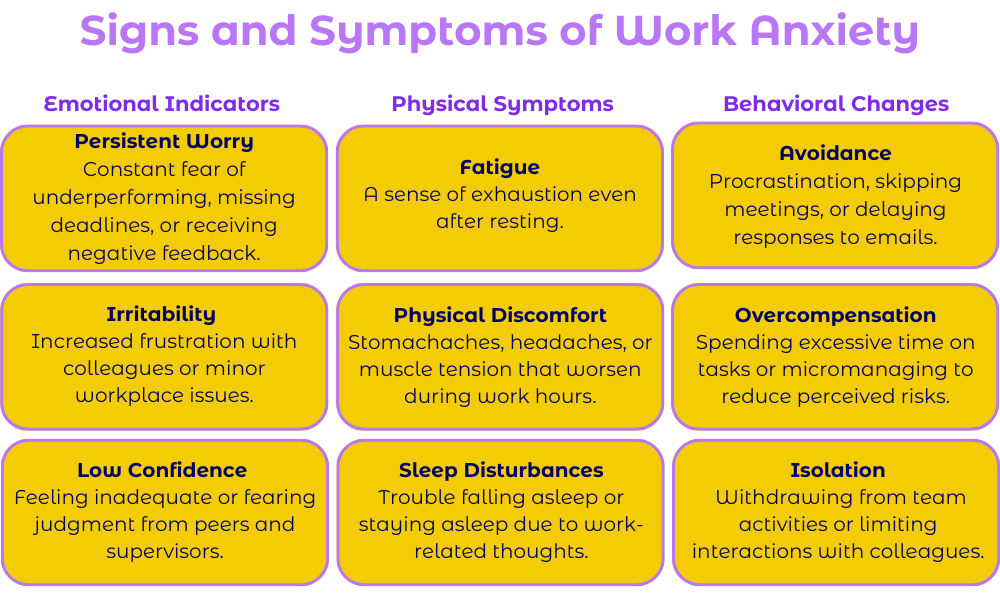
Work anxiety manifests through emotional, physical, and behavioral symptoms, often making it difficult to diagnose as it can mimic general stress. Recognizing these symptoms is crucial for taking timely action.
Emotional Indicators
- Persistent Worry: Constant fear of underperforming, missing deadlines, or receiving negative feedback.
- Irritability: Increased frustration with colleagues or minor workplace issues.
- Low Confidence: Feeling inadequate or fearing judgment from peers and supervisors.
Physical Symptoms
- Fatigue: A sense of exhaustion even after resting.
- Physical Discomfort: Stomachaches, headaches, or muscle tension that worsen during work hours.
- Sleep Disturbances: Trouble falling asleep or staying asleep due to work-related thoughts.
Behavioral Changes
- Avoidance: Procrastination, skipping meetings, or delaying responses to emails.
- Overcompensation: Spending excessive time on tasks or micromanaging to reduce perceived risks.
- Isolation: Withdrawing from team activities or limiting interactions with colleagues.
What Causes Work Anxiety?
Work anxiety can arise from a combination of external factors and internal predispositions. Identifying the root causes can provide clarity and direction for managing it effectively.
Overwhelming Workloads
High expectations, unclear priorities, and constant context switching can overwhelm even the most capable employees. Occupational health guidance consistently points to job demands, low control, and poor role clarity as common drivers of work stress, so “more time management” alone rarely fixes it.
Role Ambiguity
Unclear roles or conflicting responsibilities can create confusion and stress. Employees may feel lost or fear they are not meeting expectations.
Interpersonal Conflicts
Tensions with coworkers or supervisors, workplace bullying, and a lack of effective communication can contribute to a hostile atmosphere, increasing anxiety levels.
Job Insecurity
Economic uncertainty, company restructuring, or fear of layoffs can lead to heightened anxiety, with employees constantly worrying about their future. In APA’s Work in America reporting, job insecurity is repeatedly linked with higher stress for many workers.
Isolation in Remote Work
While remote work offers flexibility, it often leads to loneliness and feelings of disconnect. Without regular face-to-face interactions, employees may struggle to build relationships or gauge their standing in the team.
Perfectionism
Individuals with perfectionist tendencies are more prone to work anxiety, as they fear making mistakes or not meeting their own high standards.
Micromanagement
Overly controlling management styles can leave employees feeling undervalued or distrusted. Limited autonomy and low control are widely recognized contributors to job stress, especially when paired with high demands.
Technological Overload
The constant demand to stay reachable, respond quickly, and juggle multiple channels can keep your nervous system in “alert mode,” especially when response time expectations are unclear. Practical employer guidance increasingly recommends setting norms that reduce unnecessary urgency and improve predictability.
Remote and hybrid specific triggers (often missed)
- Meeting overload with no recovery time between calls.
- “Invisible work” pressure, feeling you must prove you are working.
- Async ambiguity, unclear owners, unclear deadlines, unclear “good enough.”
- Slower feedback loops, you assume the worst because you hear less.
- Always on culture, notifications run your day.
The Impact of Work Anxiety
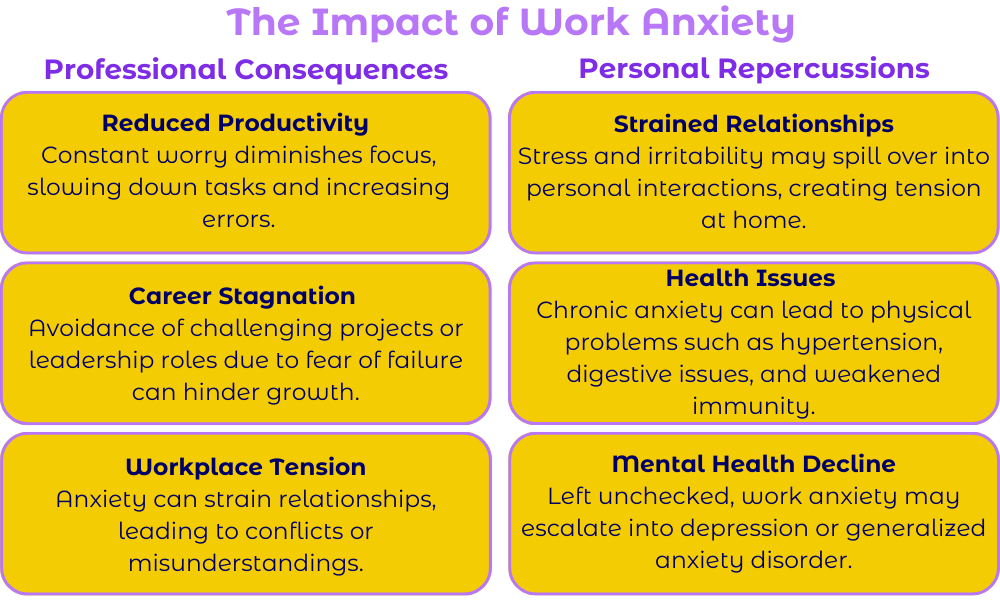
The effects of work anxiety go beyond the workplace, influencing various aspects of life. Understanding its impact highlights the importance of addressing it early.
Professional Consequences
- Reduced Productivity: Constant worry diminishes focus, slowing down tasks and increasing errors.
- Career Stagnation: Avoidance of challenging projects or leadership roles due to fear of failure can hinder growth.
- Workplace Tension: Anxiety can strain relationships, leading to conflicts or misunderstandings.
Personal Repercussions
- Strained Relationships: Stress and irritability may spill over into personal interactions, creating tension at home.
- Health Issues: Chronic anxiety can lead to physical problems such as hypertension, digestive issues, and weakened immunity.
- Mental Health Decline: Left unchecked, work anxiety may escalate into depression or generalized anxiety disorder.
Strategies to Manage and Reduce Work Anxiety
Start with the work anxiety loop (this is the lever)
Work anxiety often follows a loop: a trigger (email, meeting, feedback) leads to worry, then avoidance or overchecking, which gives short term relief but teaches your brain the trigger is dangerous. The goal is not to erase anxiety overnight, it is to reduce avoidance and increase clarity and control in small steps.
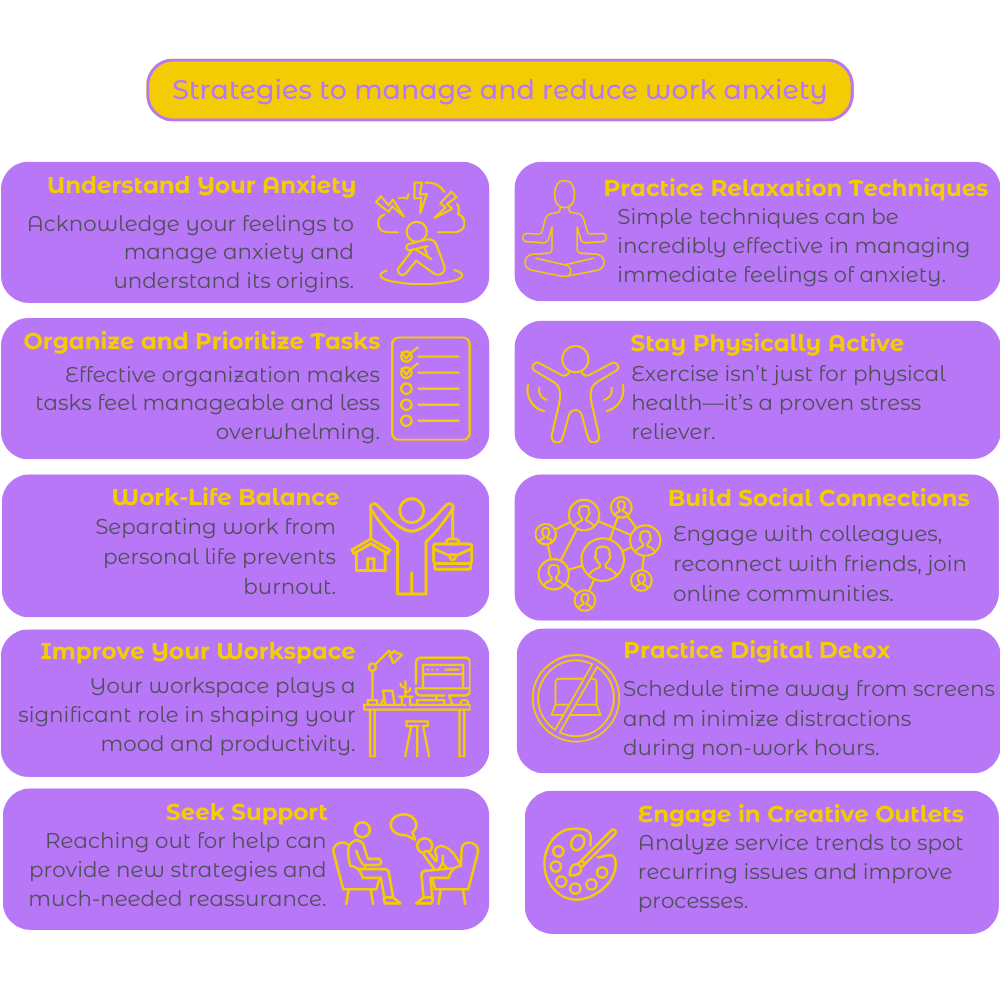
Understand Your Anxiety
Acknowledging your feelings is a vital first step toward managing anxiety. Instead of dismissing or suppressing anxious thoughts, accept them without judgment. Reflecting on these emotions helps you pinpoint their origins.
- Keep a Journal: Writing down what triggers your anxiety and how you respond can reveal patterns and help you identify areas for change.
- Talk to Someone You Trust: Share your experiences with a friend, colleague, or family member. Sometimes, an external perspective can offer clarity and reassurance.
Two fast tools for “in the moment” spikes
- Name the trigger out loud or on paper, like “I am anxious about the client call.” This reduces mental fog.
- Do one short body reset before you act, like 60 to 90 seconds of slow breathing, then take the smallest next action (send the draft, book the slot, ask the question). Small action beats perfect action.
Organize and Prioritize Tasks
Effective organization reduces the feeling of being overwhelmed, making tasks seem more manageable.
- Use a Planner or Digital Tools: Apps like Trello or Notion can help you keep track of tasks and deadlines.
- Break Tasks Down: Large projects can feel daunting; breaking them into smaller steps creates a sense of progress and accomplishment.
- The Eisenhower Matrix: Focus on tasks that are both urgent and important. Delegate or schedule tasks that fall into other categories to streamline your workload.
- Avoid Overloading Yourself: Learn to say no when your plate is already full, and be realistic about what you can accomplish in a given timeframe.
Add one clarity habit that cuts anxiety fast
At the start of each day, write 1 to 3 “must move” outcomes, not a long task list. Then share priorities with your manager or team when needed. Clarity reduces spiraling.
Foster a Healthy Work-Life Balance
Drawing a firm line between your professional and personal life helps prevent burnout.
- Create a Dedicated Workspace: Having a specific area for work helps signal to your brain when it’s time to focus and when it’s time to relax.
- Turn Off Notifications: Disconnecting from work after hours allows you to recharge. Set boundaries with colleagues about when you’re available.
- Prioritize Personal Time: Engage in hobbies, spend time with loved ones, or simply relax. These moments are crucial for mental rejuvenation.
Improve Your Workspace
Your workspace plays a significant role in shaping your mood and productivity.
- Ergonomic Furniture: Invest in a chair that supports your back and a desk that encourages good posture.
- Personal Touches: Adding items that bring you joy—like a family photo, artwork, or a small plant—can make your space feel more welcoming.
- Good Lighting: Poor lighting can strain your eyes and dampen your mood. Natural light or warm, bright bulbs can improve focus and energy.
- Declutter: A tidy workspace reduces distractions and promotes a sense of calm.
Seek Support
Reaching out for help can provide new strategies and much-needed reassurance.
- Talk to Your Manager: Share your challenges and suggest practical solutions, such as adjusted workloads or flexible hours. Many managers are willing to accommodate employees’ mental health needs.
- Use EAPs: Employee Assistance Programs often provide access to free or subsidized counseling sessions and mental health resources.
- Join Support Groups: Connecting with others who face similar struggles can reduce feelings of isolation and provide helpful coping mechanisms.
Practice Relaxation Techniques
Simple techniques can be incredibly effective in managing immediate feelings of anxiety.
- Deep Breathing Exercises: Slowly inhaling through your nose for four seconds, holding your breath for seven seconds, and exhaling through your mouth for eight seconds can lower your heart rate and induce calmness.
- Mindfulness Practices: Apps like Calm or Insight Timer guide you through meditation, helping you stay present and reduce racing thoughts.
- Progressive Muscle Relaxation: This involves tensing and then relaxing each muscle group, starting from your toes and moving upward, to release physical tension caused by stress.
Stay Physically Active
Exercise supports mental health and can reduce stress symptoms for many people.
- Aerobic Exercises: Activities like running, swimming, or cycling release endorphins, which improve mood and reduce anxiety.
- Yoga and Stretching: These practices combine physical activity with mindfulness, helping you relax both mentally and physically.
- Daily Movement: Even short walks during breaks can help reset your mind and alleviate stress.
Build Social Connections
Humans are social creatures, and meaningful connections can help buffer the effects of work anxiety.
- Engage with Colleagues: Participate in team-building events or casual virtual coffee chats to strengthen bonds.
- Reconnect with Friends: Spend time with people outside work to maintain a broader perspective on life.
- Join Online Communities: Remote workers can benefit from forums or social groups tailored to their interests.
Practice Digital Detox
- Tech-Free Periods: Schedule time away from screens, especially before bed, to allow your mind to relax.
- Use “Do Not Disturb” Features: Minimize distractions during non-work hours.
- Encourage In-Person Interactions: Opt for face-to-face meetings when possible to reduce reliance on digital communication.
Develop a Growth Mindset
- Reframe Failures: View setbacks as opportunities for learning and growth.
- Seek Feedback: Use constructive criticism to improve rather than internalize it as personal failure.
- Focus on Progress: Celebrate incremental achievements to build confidence.
Use “exposure in tiny steps” for avoidance (very effective)
If you avoid something, pick the smallest version of it and do that first. Example: instead of “finish the presentation,” do “open the deck and write 3 bullets.” Instead of “ask for feedback,” do “send a 2 sentence draft.” This retrains your brain that the situation is survivable.
Consult Professionals
If work anxiety feels overwhelming or persistent, seeking professional help is crucial.
- Therapists: Cognitive-behavioral therapy (CBT) is highly effective in addressing workplace anxiety.
- Mental Health Apps: Platforms like BetterHelp offer affordable online therapy sessions.
- Medication: For severe cases, a healthcare provider may recommend medication to help manage symptoms alongside therapy.
Cultivate Gratitude and Positivity
- Gratitude Journaling: Write down three things you’re grateful for each day to shift focus away from stressors.
- Celebrate Wins: Recognize even small successes to reinforce positive thinking.
- Limit Negative Influences: Reduce exposure to negative news or workplace gossip.
Engage in Creative Outlets
Creative activities can channel stress into productive outlets.
- Art or Crafting: Activities like painting or knitting can provide a calming distraction.
- Music or Writing: Listening to music, playing an instrument, or journaling can act as emotional outlets.
- Gardening: Tending plants fosters a sense of achievement and connection.
If you are a manager or People Ops (high impact section)
Many individual tips fail if the workplace conditions stay the same. Public health guidance emphasizes organizational actions, like reducing root causes, improving role clarity, training managers, and setting healthy norms.
Practical moves that reduce work anxiety in teams;
- 1) Make priorities explicit, what matters this week, what can wait.
-
- Define response time norms, like “email within 24h” unless urgent.
-
- Reduce meeting load, add 5 to 10 minute buffers, rotate “no meeting” blocks.
-
- Clarify roles and owners, especially in async work.
-
- Train managers to spot overload early and adjust workload, not only encourage “self care.”
When to Seek Professional Help
If anxiety begins to interfere with daily life or self-help methods prove insufficient, it’s crucial to consult a professional. Symptoms such as frequent panic attacks, physical illness related to stress, or persistent dread about work should not be ignored.
FAQ
Can work anxiety go away on its own?
Sometimes it can, especially if the trigger is temporary. If it repeats for weeks or months, it usually needs a deliberate change, like clearer priorities, fewer avoidance patterns, or better boundaries.
How do I know if it is anxiety or I just hate my job?
If your body is constantly in alert mode and you worry even about routine tasks, that points toward anxiety patterns. If the anxiety drops quickly when you think about leaving or changing teams, the environment may be the main driver.
What is the fastest thing I can do today?
Pick one avoided task and do the smallest first step, then ask for one piece of clarity (priority, deadline, or definition of done).
Does remote work make work anxiety worse?
It can, mainly through ambiguity, isolation, and always on messaging, but good norms and clear ownership often solve most of that.
Should I tell my manager?
If your manager is reasonable, yes, but focus on work conditions and solutions, not only emotions. Use the scripts above.
Is therapy worth it for work anxiety?
If it is persistent, yes. CBT based approaches are commonly used and can be very practical for work specific triggers.
Conclusion
Work anxiety is a complex but manageable issue. By understanding its causes, recognizing its symptoms, and adopting proactive strategies, you can reduce its impact and regain control of your professional and personal life. Remember, seeking support is not a sign of weakness but a step toward resilience. Start small, make consistent changes, and prioritize your mental well-being.
Sources
- Anxiety and Depression Association of America. (2023). “Understanding Workplace Anxiety.”
- Gallup Workplace Report. (2023). “Global Workplace Stress Statistics.”
- Mayo Clinic. (2023). “Signs and Symptoms of Anxiety Disorders.”
- National Institute of Mental Health. (2023). “Effective Treatments for Anxiety.”
- Harvard Business Review. (2023). “Addressing Work-Related Stress in Hybrid Workplaces.”