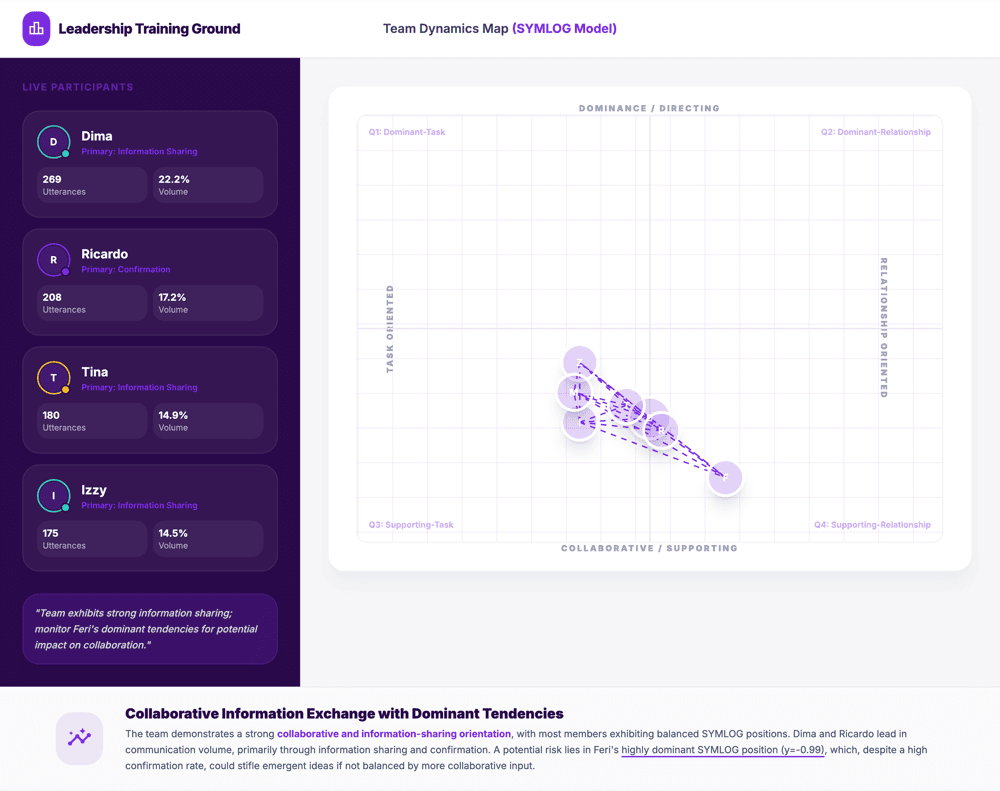
Team Dynamics Map
Positions every player on task-vs-relationship and collaborative-vs-dominant axes: interaction patterns, roles and balance.

A game your team plays together on the call, and a report built from how they planned, decided and recovered, not from how they rated themselves.
AI that reads the room, not the transcript.
Every game below is tagged for this assessment because its mechanics surface the behavior; the note under each one says why. Pick one main exercise per session, and the kit's report bundle rides along through checkout.
 $30 Marvelli's Last Show A full-length escape run: planning, task-splitting and regrouping stay visible from the first minute to the buzzer.
 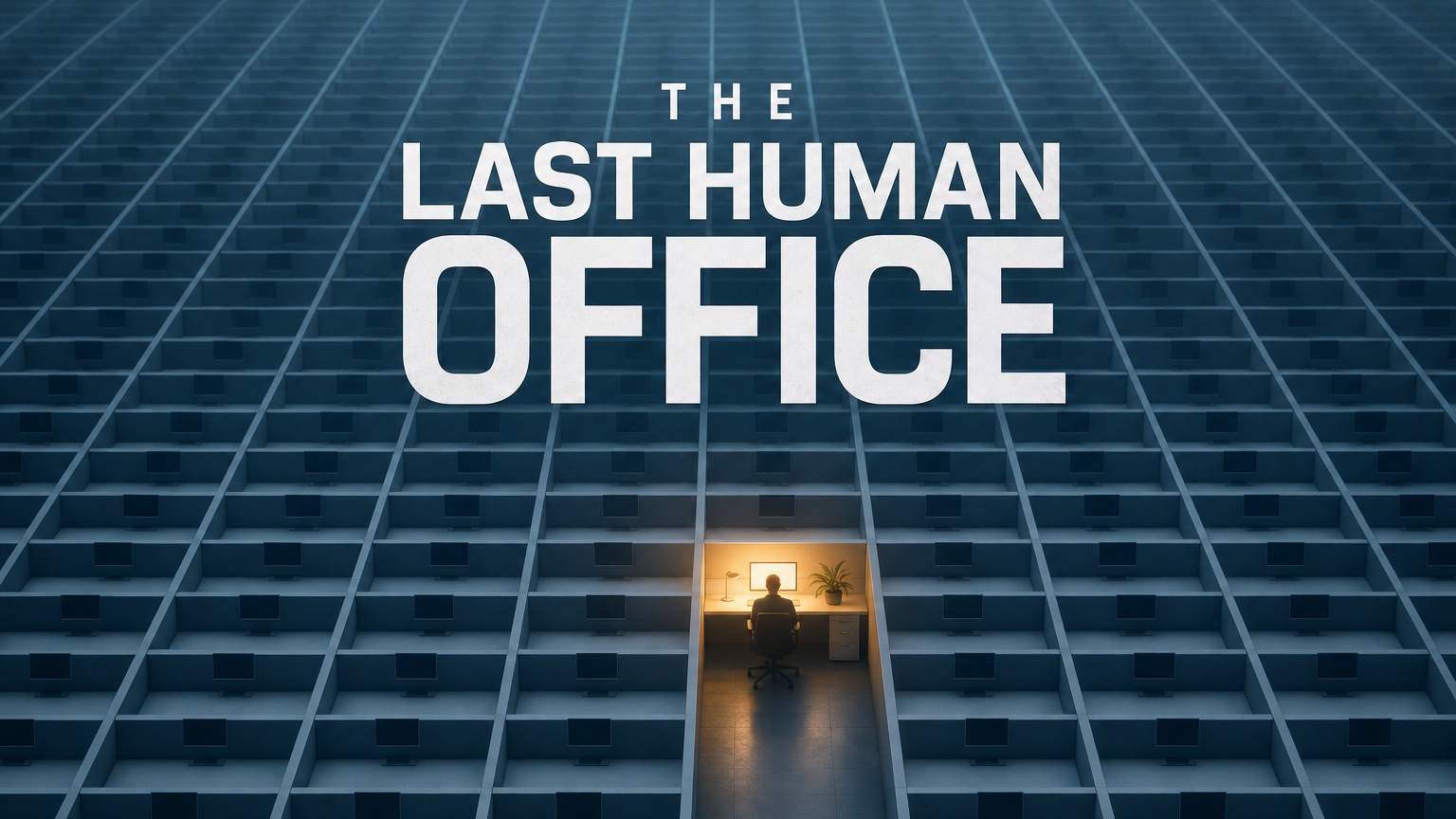 $30 The Last Human Office A long co-op arc with distinct phases — enough observed minutes for the full effectiveness picture.
 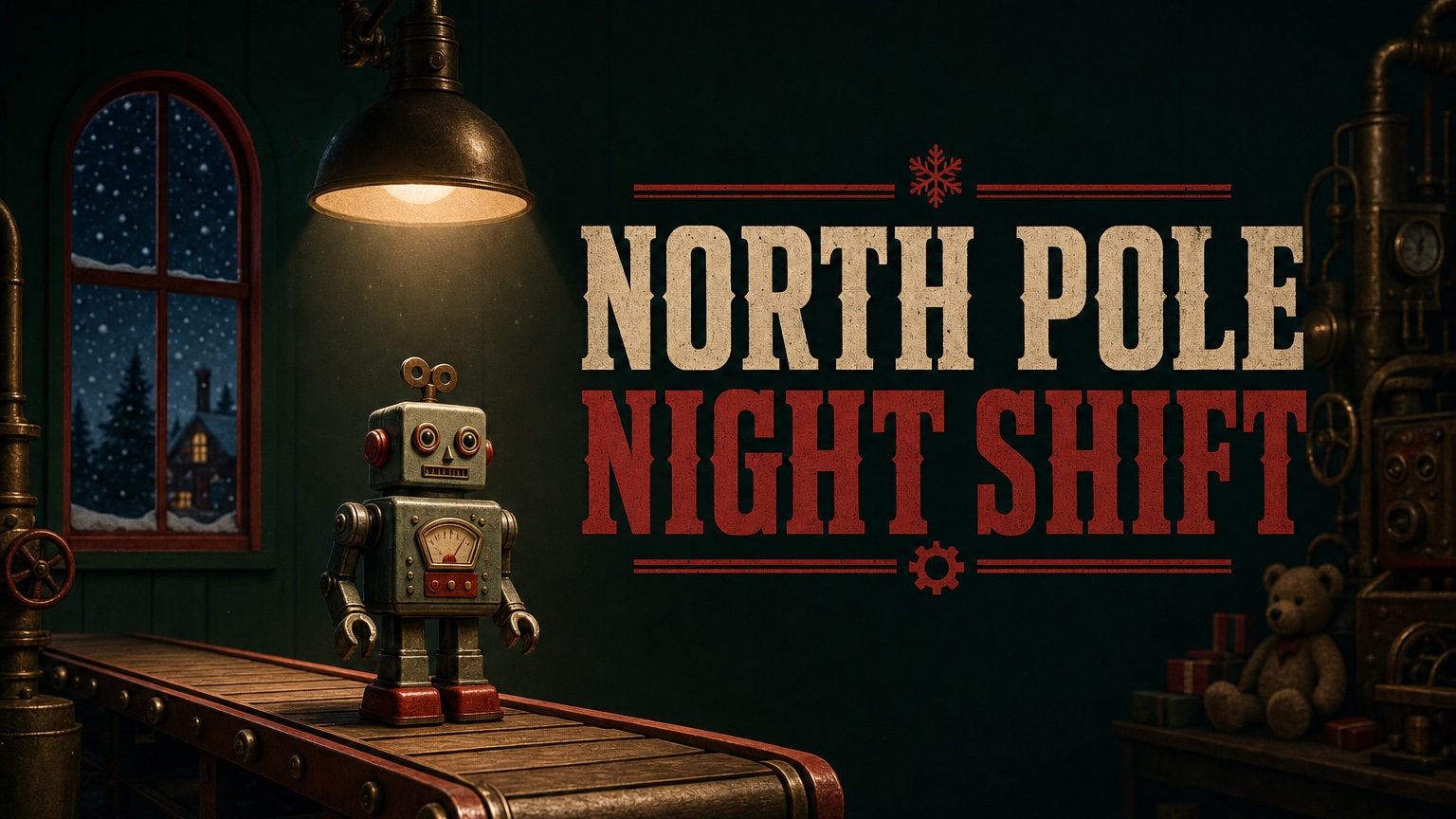 $30 North Pole Night Shift Coordination against the clock: the room rewards teams that divide work early and check in often.
 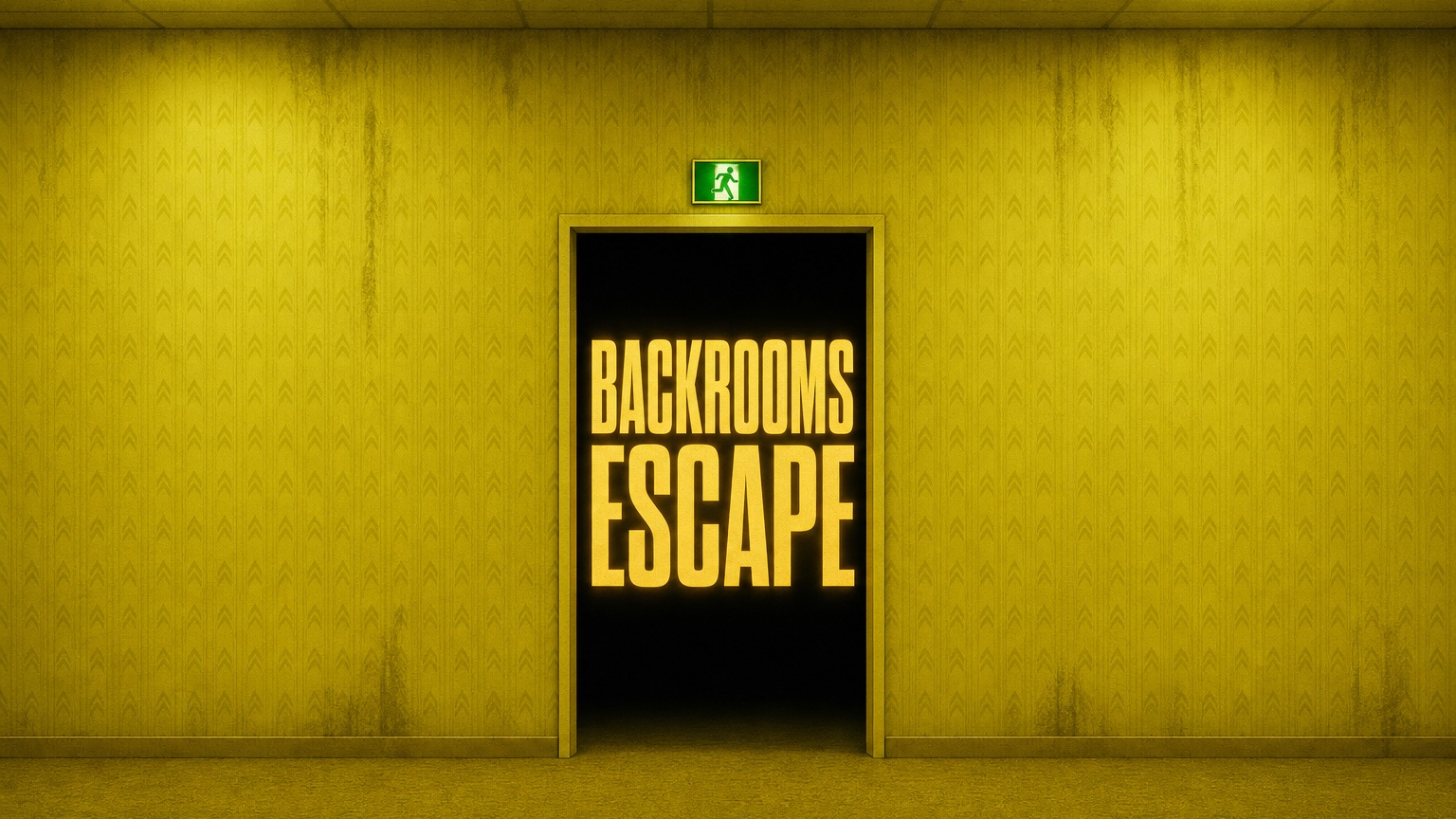 $30 Backrooms Escape Limited sightlines: progress moves exactly as fast as information does.
 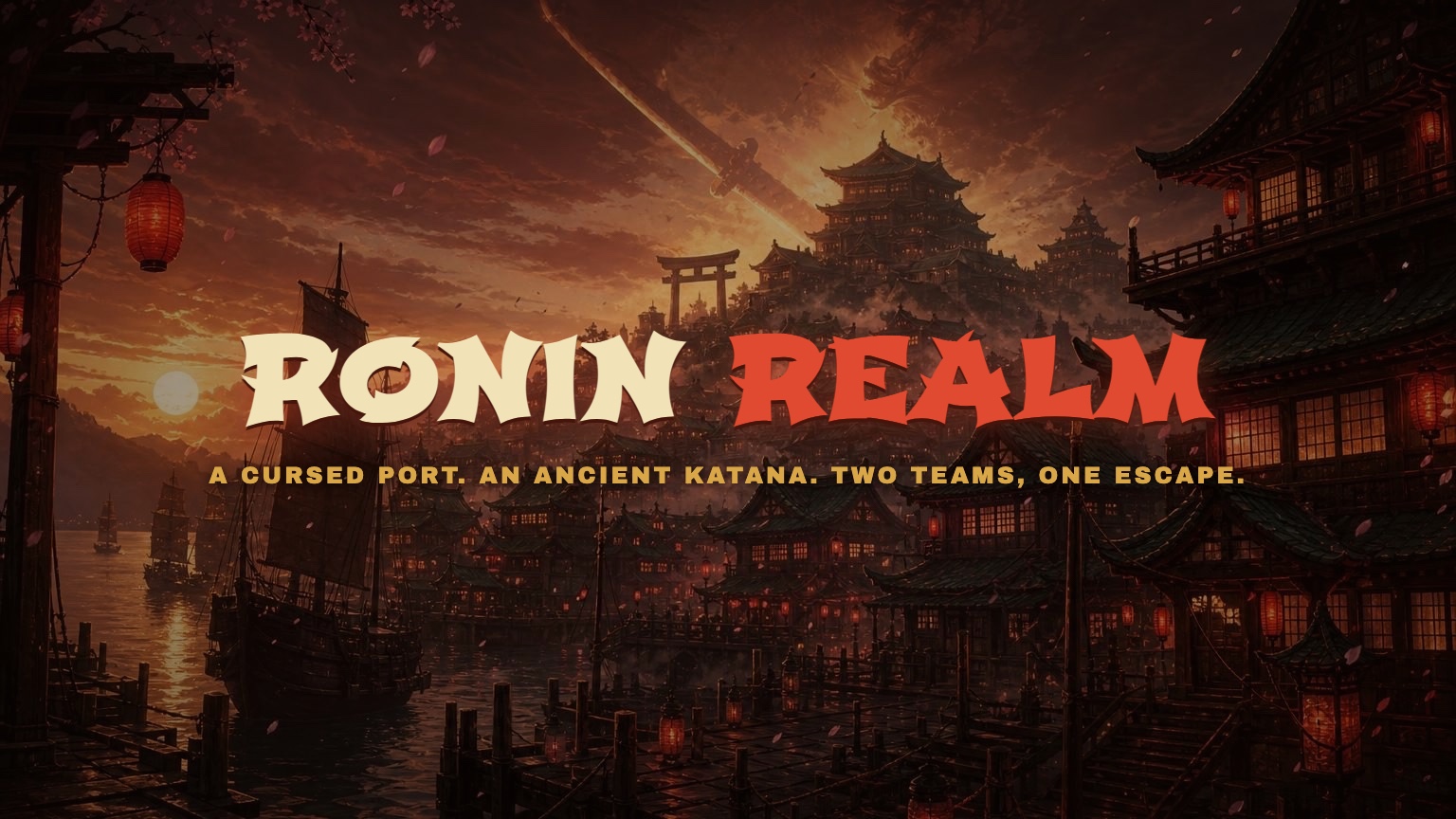 $30 Ronin Realm Split-team play: quiet voices hold key pieces, and the group's reaction to mistakes is out in the open.
 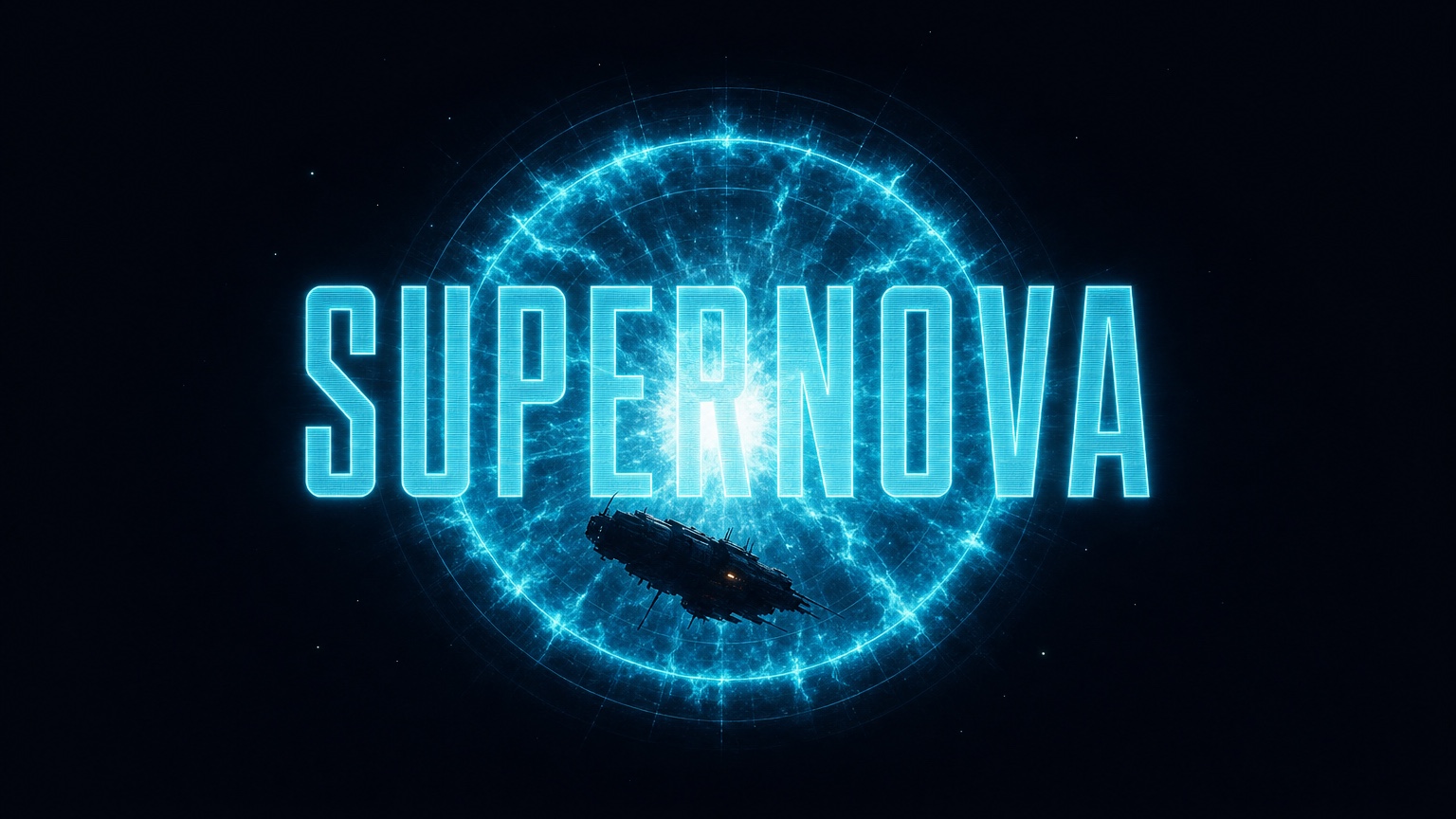 $30 Supernova A hard finale forces load-balancing and recovery after wrong turns.
 Free with an account. Run it as the opener of the same call, or let a client try the format before the assessed session.
Built from what the AI observed during play and delivered by email about 5 minutes after the session ends, as HTML ready for your client deck. Consent first, always: the bot announces itself, and the report is a mirror for the team, never a dossier for the boss.
Positions every player on task-vs-relationship and collaborative-vs-dominant axes: interaction patterns, roles and balance.
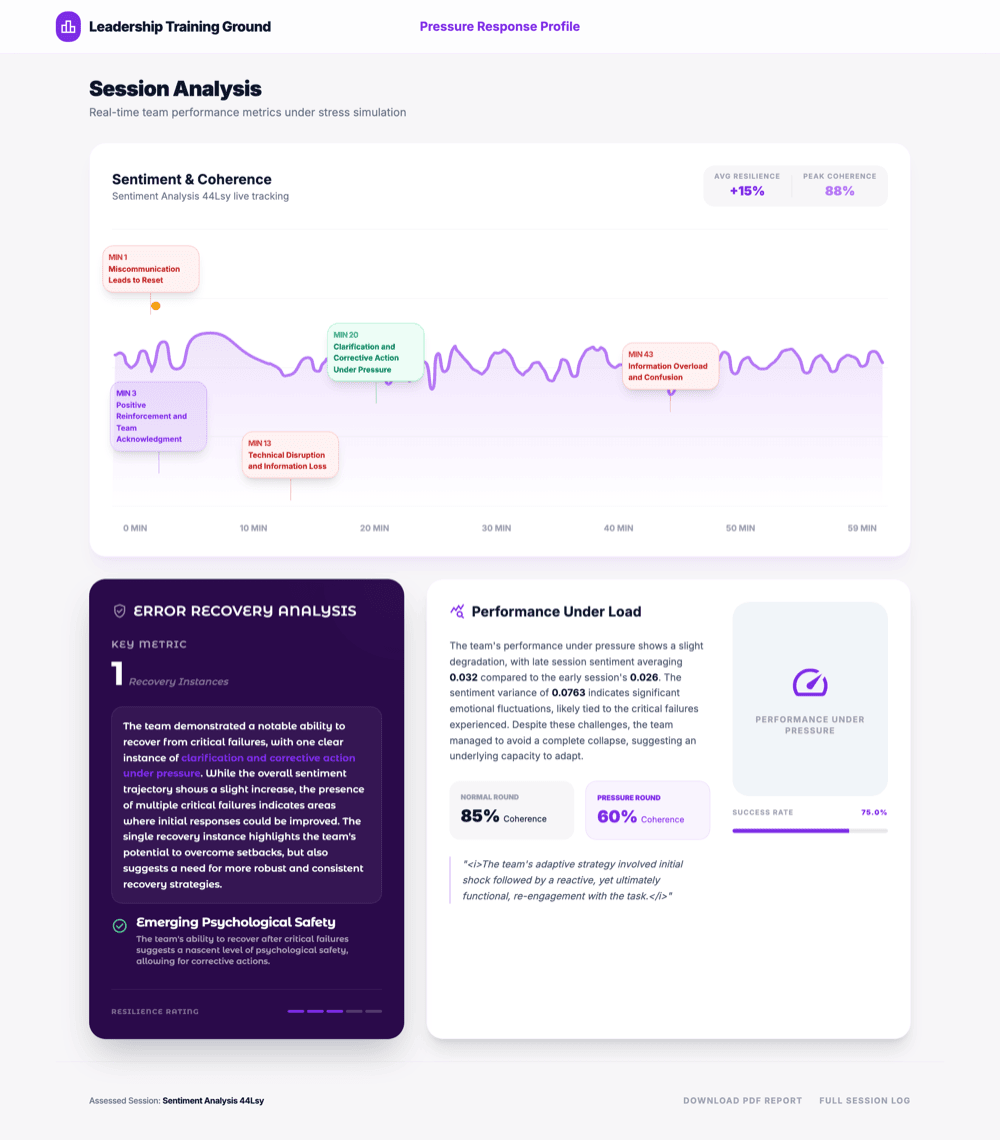
How each player responded when the clock and stakes ramped up, with a session sentiment timeline and error-recovery reads.
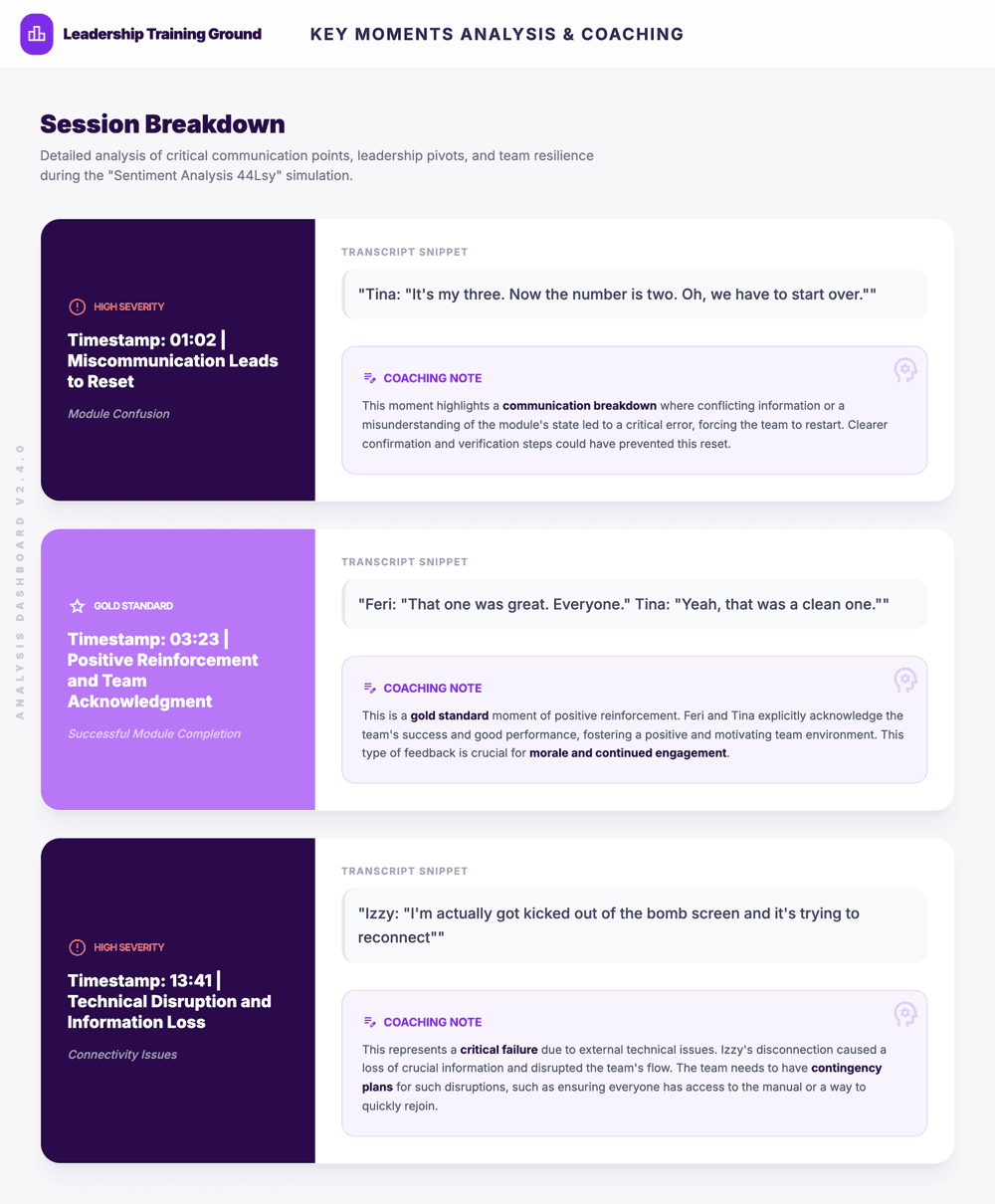
The pivotal exchanges of the session, timestamped and annotated for the debrief: failures, recoveries and gold-standard moments.
Partners white-label the whole reporting layer: your logo, your colors, your bot name. The client sees your practice, not our stack.
Customizable games take client-specific content: dilemmas written for their org, word lists from their domain. Your AI assistant can theme a session in one prompt.
The Key Moments cards are built for the debrief: timestamped exchanges you can put on screen and ask "what was happening here?" No slide-writing the night before.
| Survey-based instruments | This kit | |
|---|---|---|
| How the data is produced | Everyone rates statements about the team on a 1–5 scale | The team plays a game with real stakes; behavior is observed as it happens |
| Can it be gamed? | Answers shift with mood, politics and who reads the results | Hard to perform a false self for 60 minutes of live problem-solving |
| Typical price | Around $210 per person, plus facilitator kits from ~$1,495 and accreditation from ~$2,195 | $50 per kit session (up to ~10 players): game + report bundle, $10 off the separate prices |
| Certification required | Usually; accreditation gates the debrief materials | None. Ever. |
| The session itself | A questionnaire before the offsite | The most talked-about hour of the offsite |
Vendor prices are published list prices at the time of writing. All trademarks belong to their owners; Superglue is not affiliated with or endorsed by any instrument vendor named on this site.
How the team operates when something is at stake: who plans, who decides, how work gets divided, what happens after a wrong turn. The bundle maps interaction patterns (Team Dynamics Map), behavior under load (Pressure Response Profile) and the moments that defined the session (Key Moments Analysis).
Escape rooms are the core exercise: a shared goal, a clock, and enough moving parts that the whole team has to organize itself. Any game tagged for team effectiveness works, and the free warm-ups let the team try the format first.
No. Superglue makes game-based team assessments for team development — not candidate screening. The team plays together as a group; nobody is tested alone against a machine, and reports are never pass/fail.
Always. The report bot announces itself when it joins the call, and anyone can send it away with a chat message. Reports are written as a mirror for the team, not a dossier for management.
Nothing. Games run in the browser from one shared link, and the report bot joins the Zoom, Meet or Teams call you already scheduled. Reports arrive by email about 5 minutes after the session ends.